
On Sensitivity: Learning to Regulate, Integrate, and Honor It. By Lexi Evans, LPC Associate
- posted: Feb. 06, 2026
I know what it is like to be a highly sensitive person.
I want to share why this matters to me, how it shows up in my life, and some of the ways I have
learned to navigate it, and how I can help you learn to navigate it too.
When I was younger, I remember sitting in classrooms and being unable to tune things out.
The air conditioning was always the loudest thing in the room. No one else seemed to notice how
distracting it was. It was just there.
I noticed people too. The tiniest shift in someone’s tone. A pause between words that lingered a
bit too long. A change in affect that suggested something wasn’t being said.
I have always mapped my world through emotion. I have always felt everything.
I cry watching Tiktoks of dogs recognizing their owners in public. Yesterday, I cried watching a
mother and son harmonize a folk song while playing a banjo. I cried when I traded in my first car
because of the memories (and because of the possibility it could be sentient and feel abandoned).
I cry watching the news because of the state of our world. I do not shy away from emotion. I let
it move through me. They are evidence that I am alive, impacted, and care. This is part of how I
have always made meaning. Emotion comes first, and understanding follows because I search for
what each emotion means.
Yes, I have also always needed to make sense of the world. Meaning making is how my mind
organizes experience. It is inseparable from the sensitivity that allows me to see and
conceptualize patterns and feel undercurrents of rooms.
As a child, I did not have language for any of this. I only knew I was tracking things I could not
quite explain.
I have always lived with both ADHD and sensory processing sensitivity. They are not separate
experiences for me. My nervous system takes in more information, quickly and with less
filtering. What has changed over time is not the sensitivity itself, but my ability to regulate it and
the meaning I’ve attached to it.
When I was younger, there was no pause between noticing and being flooded. Everything arrived
at once and stayed loud.
Places like the grocery store can still activate that pattern.
Allow me to illustrate. Let me know if you can relate.
The freezers are humming and the sound never fully fades into the background. The aisle is
freezing. Children are crying, playing, asking their parents if they can put something in the cart.
The parents say no. More crying. Registers are beeping and scanning barcodes and the sound
feels like it is living inside my head. I hear carts rolling across the floor. Some glide. Some rattle.
Some drag bad wheels. Usually mine. People stop in the middle of aisles, creating traffic. Then I
am the one stopping in the middle of aisles because I cannot remember why I went down that
aisle in the first place. Bright packaging competes for attention from every shelf.
I think my nervous system registers this space as war. And then there is the parking lot. I will
spare you the details. We know what happens there.
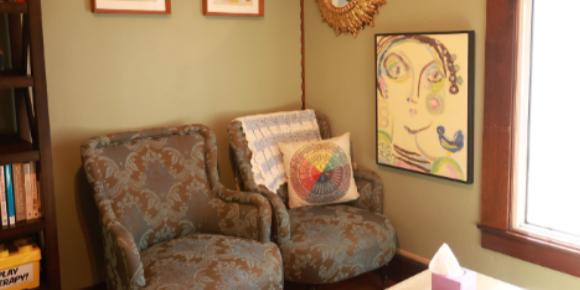
The therapy room is a different story.
I notice small changes in tone as a sentence moves closer to something vulnerable.
Moments when words stop, but emotion continues.
The difference between what is being said and what is being felt.
Patterns that repeat across stories and weeks and sessions.
How I can visualize my own regulation expanding and filling the room.
When something is ready to be named, and when it is not.
In this space, the same sensitivity becomes usable. I know what to do with it.
This difference is not about temperament alone. It is about how I learned how to regulate and
integrate a sensitive nervous system over time.
This is who I am at the end of the day.
Overstimulated in the grocery store.
Weeps for the state of the world and a banjo in the same half hour.
Steady and present in the therapy room.
All shaped by that same beautiful sensitivity.
Which means I cannot villainize this way of being.
And I cannot celebrate it uncritically either.
Over time, I have grown to value my sensitivity when it is used in service of connection,
understanding, and healing.
I also respect the cost it carries.
This is my experience. And maybe it’s your experience too.
Therapy can be a place where you learn to regulate your nervous system, trust what you notice,
and make sense of your inner world without trying to change who you are.
If you want support navigating this, I would be glad to help you do that.
If you’re highly sensitive and feel overwhelmed more than supported by your nervous system, therapy can help you learn regulation without losing your depth. Reach out if you’d like support navigating this.
- posted: Feb. 06, 2026
I know what it is like to be a highly sensitive person.
I want to share why this matters to me, how it shows up in my life, and some of the ways I have
learned to navigate it, and how I can help you learn to navigate it too.
When I was younger, I remember sitting in classrooms and being unable to tune things out.
The air conditioning was always the loudest thing in the room. No one else seemed to notice how
distracting it was. It was just there.
I noticed people too. The tiniest shift in someone’s tone. A pause between words that lingered a
bit too long. A change in affect that suggested something wasn’t being said.
I have always mapped my world through emotion. I have always felt everything.
I cry watching Tiktoks of dogs recognizing their owners in public. Yesterday, I cried watching a
mother and son harmonize a folk song while playing a banjo. I cried when I traded in my first car
because of the memories (and because of the possibility it could be sentient and feel abandoned).
I cry watching the news because of the state of our world. I do not shy away from emotion. I let
it move through me. They are evidence that I am alive, impacted, and care. This is part of how I
have always made meaning. Emotion comes first, and understanding follows because I search for
what each emotion means.
Yes, I have also always needed to make sense of the world. Meaning making is how my mind
organizes experience. It is inseparable from the sensitivity that allows me to see and
conceptualize patterns and feel undercurrents of rooms.
As a child, I did not have language for any of this. I only knew I was tracking things I could not
quite explain.
I have always lived with both ADHD and sensory processing sensitivity. They are not separate
experiences for me. My nervous system takes in more information, quickly and with less
filtering. What has changed over time is not the sensitivity itself, but my ability to regulate it and
the meaning I’ve attached to it.
When I was younger, there was no pause between noticing and being flooded. Everything arrived
at once and stayed loud.
Places like the grocery store can still activate that pattern.
Allow me to illustrate. Let me know if you can relate.
The freezers are humming and the sound never fully fades into the background. The aisle is
freezing. Children are crying, playing, asking their parents if they can put something in the cart.
The parents say no. More crying. Registers are beeping and scanning barcodes and the sound
feels like it is living inside my head. I hear carts rolling across the floor. Some glide. Some rattle.
Some drag bad wheels. Usually mine. People stop in the middle of aisles, creating traffic. Then I
am the one stopping in the middle of aisles because I cannot remember why I went down that
aisle in the first place. Bright packaging competes for attention from every shelf.
I think my nervous system registers this space as war. And then there is the parking lot. I will
spare you the details. We know what happens there.
The therapy room is a different story.
I notice small changes in tone as a sentence moves closer to something vulnerable.
Moments when words stop, but emotion continues.
The difference between what is being said and what is being felt.
Patterns that repeat across stories and weeks and sessions.
How I can visualize my own regulation expanding and filling the room.
When something is ready to be named, and when it is not.
In this space, the same sensitivity becomes usable. I know what to do with it.
This difference is not about temperament alone. It is about how I learned how to regulate and
integrate a sensitive nervous system over time.
This is who I am at the end of the day.
Overstimulated in the grocery store.
Weeps for the state of the world and a banjo in the same half hour.
Steady and present in the therapy room.
All shaped by that same beautiful sensitivity.
Which means I cannot villainize this way of being.
And I cannot celebrate it uncritically either.
Over time, I have grown to value my sensitivity when it is used in service of connection,
understanding, and healing.
I also respect the cost it carries.
This is my experience. And maybe it’s your experience too.
Therapy can be a place where you learn to regulate your nervous system, trust what you notice,
and make sense of your inner world without trying to change who you are.
If you want support navigating this, I would be glad to help you do that.
If you’re highly sensitive and feel overwhelmed more than supported by your nervous system, therapy can help you learn regulation without losing your depth. Reach out if you’d like support navigating this.
Location
Primary Location
433 S Tancahua
Corpus Christi, TX 78401